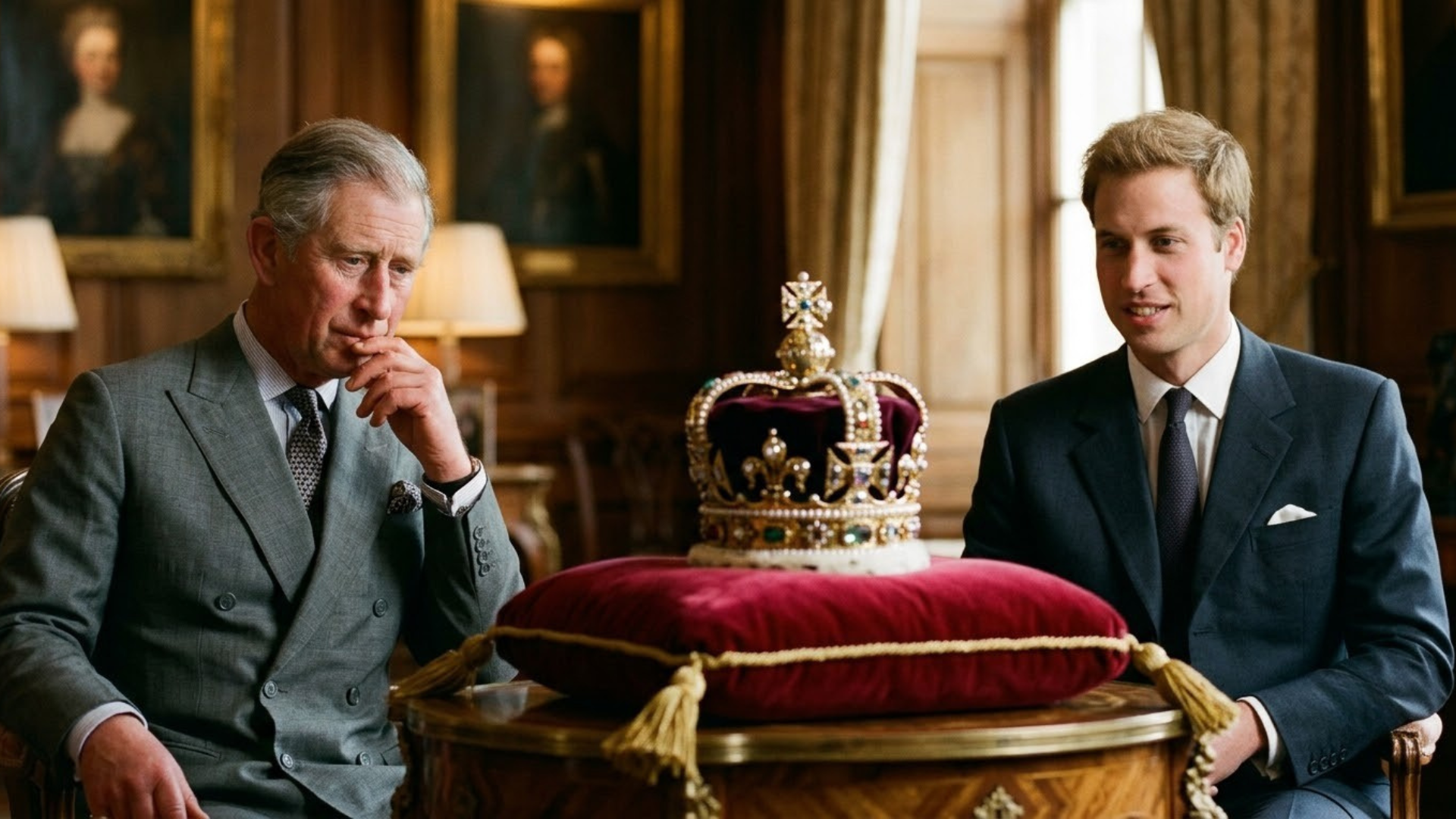
For most of his life, Prince Charles knew that one day he would be king. But for many years, a large part of the British public seemed to hope that day would never come.
In the early 1990s, his marriage to Princess Diana fell apart in public. Books, leaked tapes and television interviews revealed the unhappiness behind the fairy tale. In December 1992, the couple’s separation was announced, and Charles’s popularity dropped sharply.
Then, in August 1997, Diana was killed in a car crash in Paris. The nation’s grief was enormous, and much of the public’s sympathy was with her and her two sons. Many people blamed Charles for the unhappiness of her life.
Around this time, a new question began to appear in newspaper opinion polls: should the crown skip a generation and pass straight to Prince William?
Again and again, through the late 1990s and into the 2000s, polls suggested that many Britons would prefer William as their next king. As William grew into a young man, studied at university and joined the armed forces, he was seen as modern, likeable and, to many, very much his mother’s son.
But there was a big problem with the idea. In Britain, the order of succession is set by law. When a monarch dies, the heir becomes sovereign immediately. There is no vote, and the public has no say.
The only way the crown could have skipped Charles was if he had chosen to give up his own right to the throne, which would also have required changes in Parliament. Charles never showed any sign of doing that, and William always made clear that he supported his father.
Slowly, the public mood shifted. Charles married Camilla in 2005, and over time she won more acceptance. Charles took on more of the Queen’s duties as she grew older, and his long work on the environment and young people began to be seen in a new light.
On 8 September 2022, Queen Elizabeth II died, and Charles became King at the age of 73, the oldest person ever to take the British throne. He was crowned at Westminster Abbey in May 2023.
The polls that once wanted to skip him are now a curious piece of history. They showed how deeply Diana’s story had shaped the nation’s feelings, and how, in the end, the law of succession, not public opinion, decides who wears the crown.