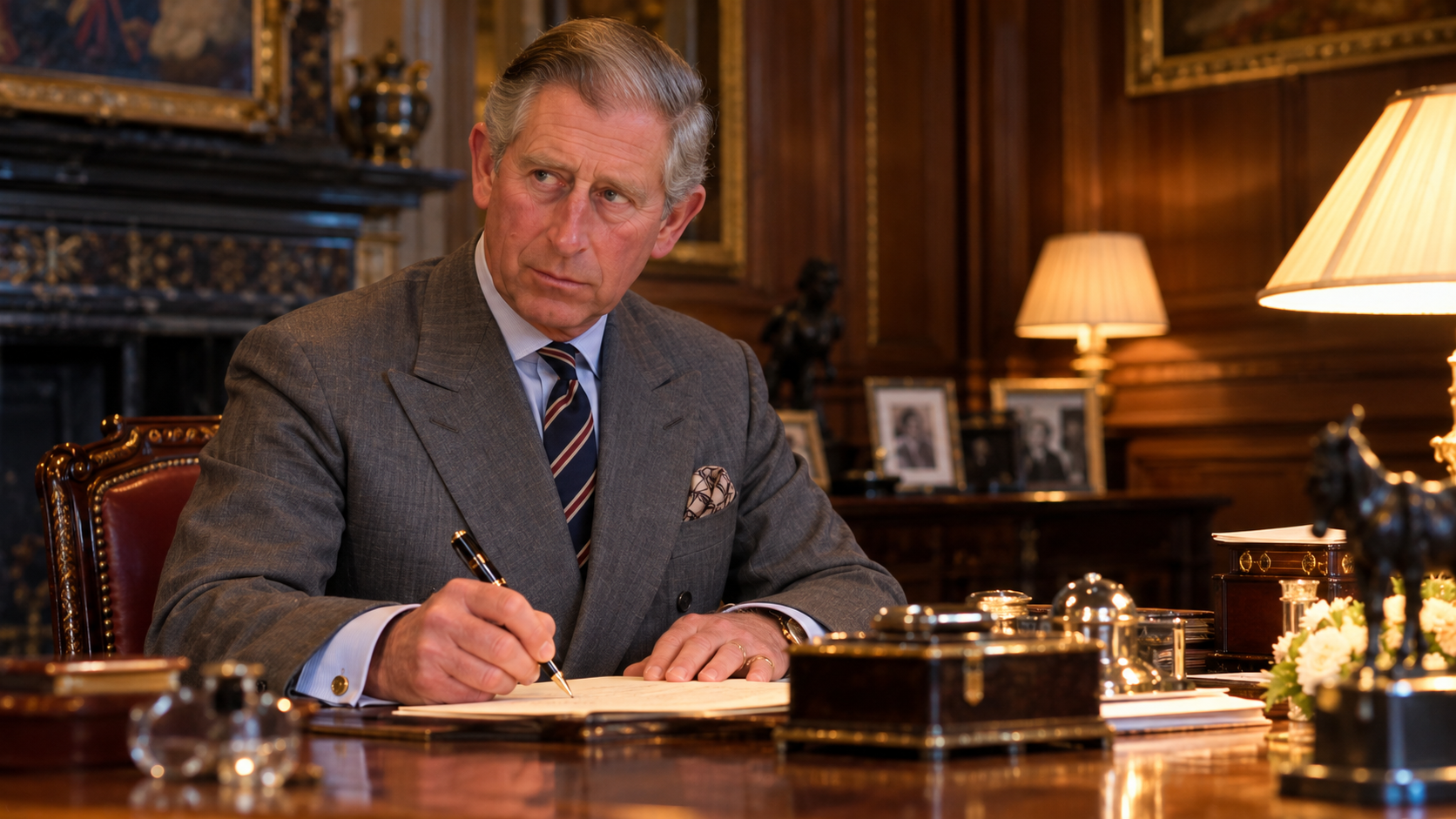
Prince Charles was well known for writing notes and memos. Throughout his life, he sent letters and messages to ministers, staff and friends, often by hand and often with strong opinions.
Most of these notes stayed private. But in 2004, one of them became public in the most awkward way possible.
Charles had strong views on many subjects, from architecture and farming to education. He believed in traditional skills and often spoke about the value of learning a craft properly.
A former member of his staff, Elaine Day, brought a case to an employment tribunal. She had worked in his office and raised concerns about her treatment and her chances of progressing in her job.
During the case, a memo written by Charles was revealed. It had been written in response to a suggestion about staff being able to move into more senior roles.

In the memo, Charles wrote: ‘What is wrong with everyone nowadays? Why do they all seem to think they are qualified to do things far beyond their technical capabilities?’
When the words were published, the reaction was strong. Many people felt the prince was saying that ordinary people should know their place and not aim too high.
Politicians and commentators criticised the memo as snobbish and out of touch. Some pointed out that the government was encouraging people to improve themselves through education and training. Critics said a future king should be supporting ambition, not mocking it.
Newspapers used phrases like ‘above their station’ to describe the attitude many people felt the memo showed. Cartoonists and comedians had a field day.
The row lasted for days. Radio phone-ins and letters pages were filled with opinions, and the memo was compared with his other well-known comments over the years.

Clarence House defended the prince. His supporters said the note was a private reaction to one particular issue, and that his charity, The Prince’s Trust, had helped thousands of young people from tough backgrounds build better lives.
Still, the memo became one of the most quoted examples of Charles’s private views. For his critics, it showed a man from a very different world. For his fans, it was a few hasty words taken out of context.