After Princess Diana’s death in 1997, there was a long debate about how she should be remembered. Many ideas were discussed, from statues to gardens. In the end, a committee chose a design by the American landscape architect Kathryn Gustafson.
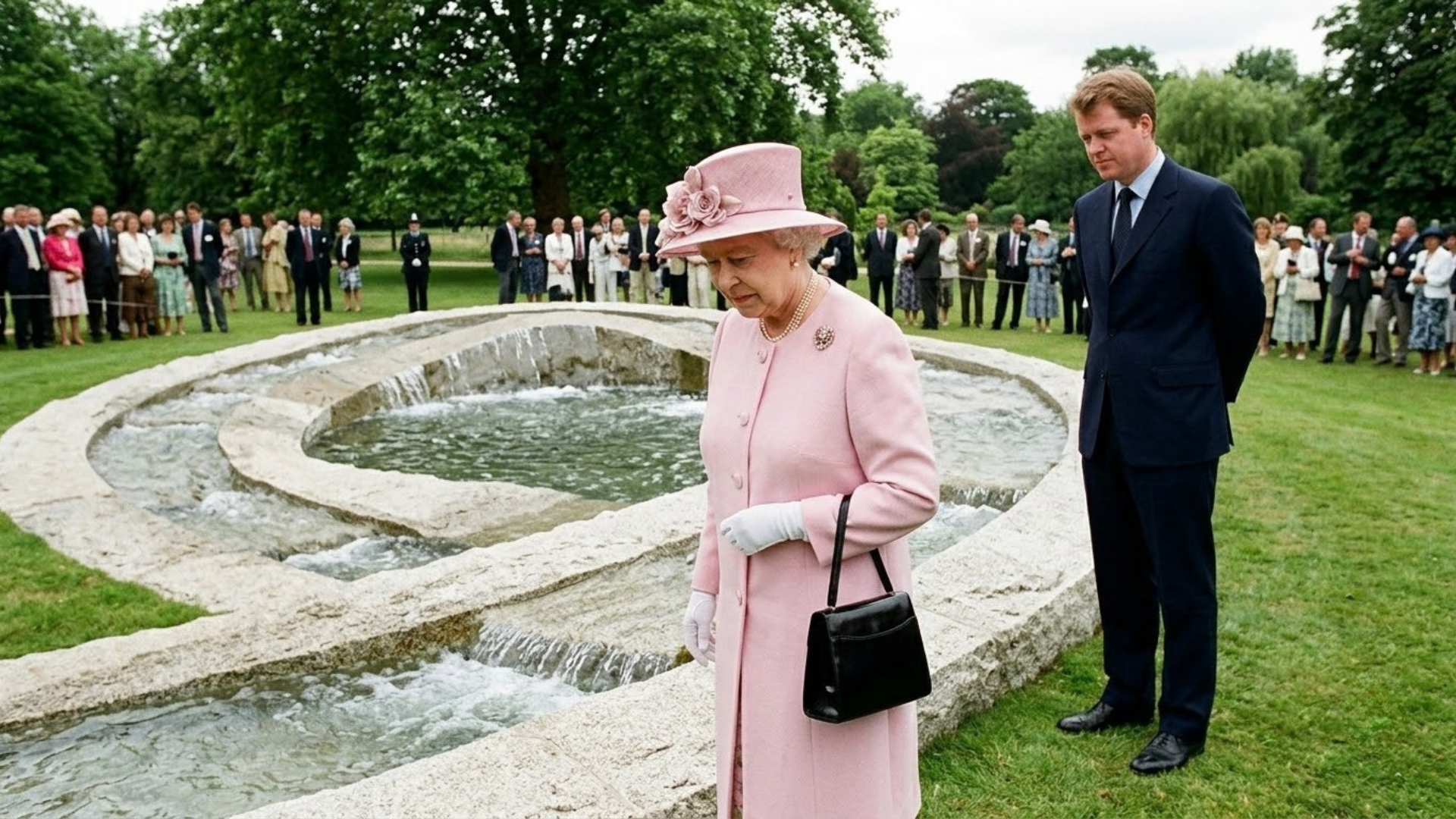
Instead of a traditional statue, it would be a fountain: an oval ring of pale Cornish granite, set into the grass of Hyde Park near the Serpentine. Water would flow in two directions, sometimes calm and sometimes tumbling over steps, before meeting in a peaceful pool at the bottom.
The design was meant to reflect Diana’s life, with its happy and its turbulent moments, and her openness to people. Visitors, especially children, would be encouraged to touch the water and sit on its edge. The cost was about £3.6 million.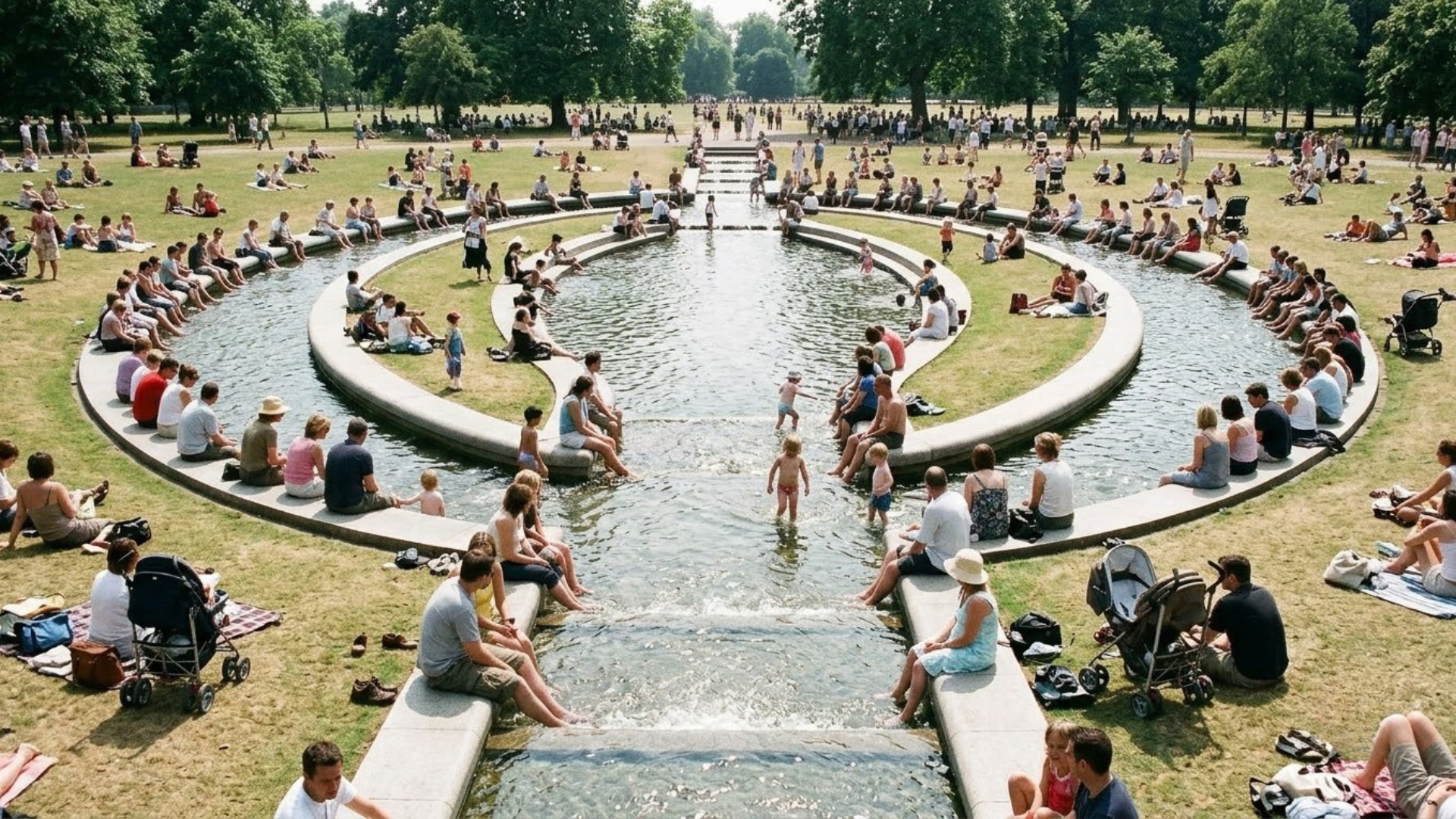
On 6 July 2004, the Queen formally opened the fountain, alongside members of Diana’s family. It was a warm summer, and the crowds came in their thousands. People sat on the edges, paddled in the water and let their children splash and run along it.
Within days, problems began. The smooth granite became slippery. Visitors slipped and fell, and several people were treated in hospital for injuries. At the same time, leaves from nearby trees blocked the fountain’s drains, causing it to flood.
Less than three weeks after the Queen opened it, the fountain was closed to the public. Photographs of the memorial fenced off behind barriers appeared in newspapers across Britain. Critics called it a national embarrassment, and some questioned why such a costly memorial had not been tested more carefully.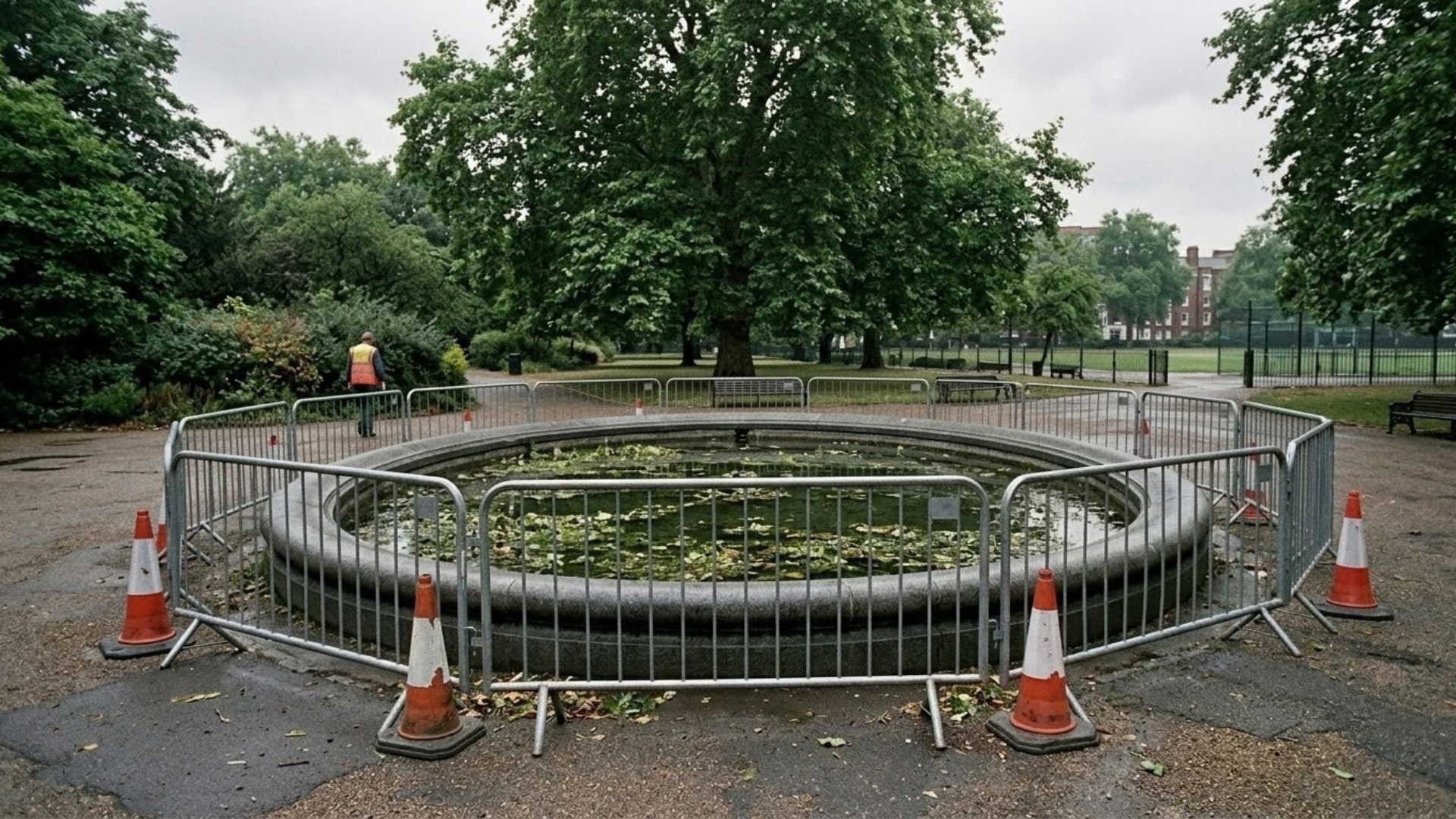
Engineers made changes. The surface was roughened in places to reduce slipping, drainage was improved, and rules were introduced: visitors could sit on the edge and dip their feet, but walking in the water was not allowed. Stewards were placed around the fountain to keep watch.
The fountain reopened later that summer and has remained open since, with seasonal closures for maintenance. Today, it is one of the most visited memorials in London, enjoyed by thousands of families every summer.
Its troubled start is now largely forgotten. But for a few weeks in 2004, the memorial to the People’s Princess became a symbol of good intentions that did not quite go to plan