Shortly after midnight on 31 August 1997, the car carrying Princess Diana crashed in the Pont de l’Alma tunnel in Paris. Within minutes, emergency services were on their way. What happened next would be questioned for years.
In Britain and America, many people expected that an injured patient would be rushed to hospital as fast as possible. But France had a very different system. Its emergency service sent doctors to the scene, and their job was to treat and stabilise patients before moving them.
This meant the team spent a long time working on Diana at the scene. She was carefully freed from the car and given treatment before she was placed in the ambulance. Doctors believed moving her too quickly could put her life at greater risk.
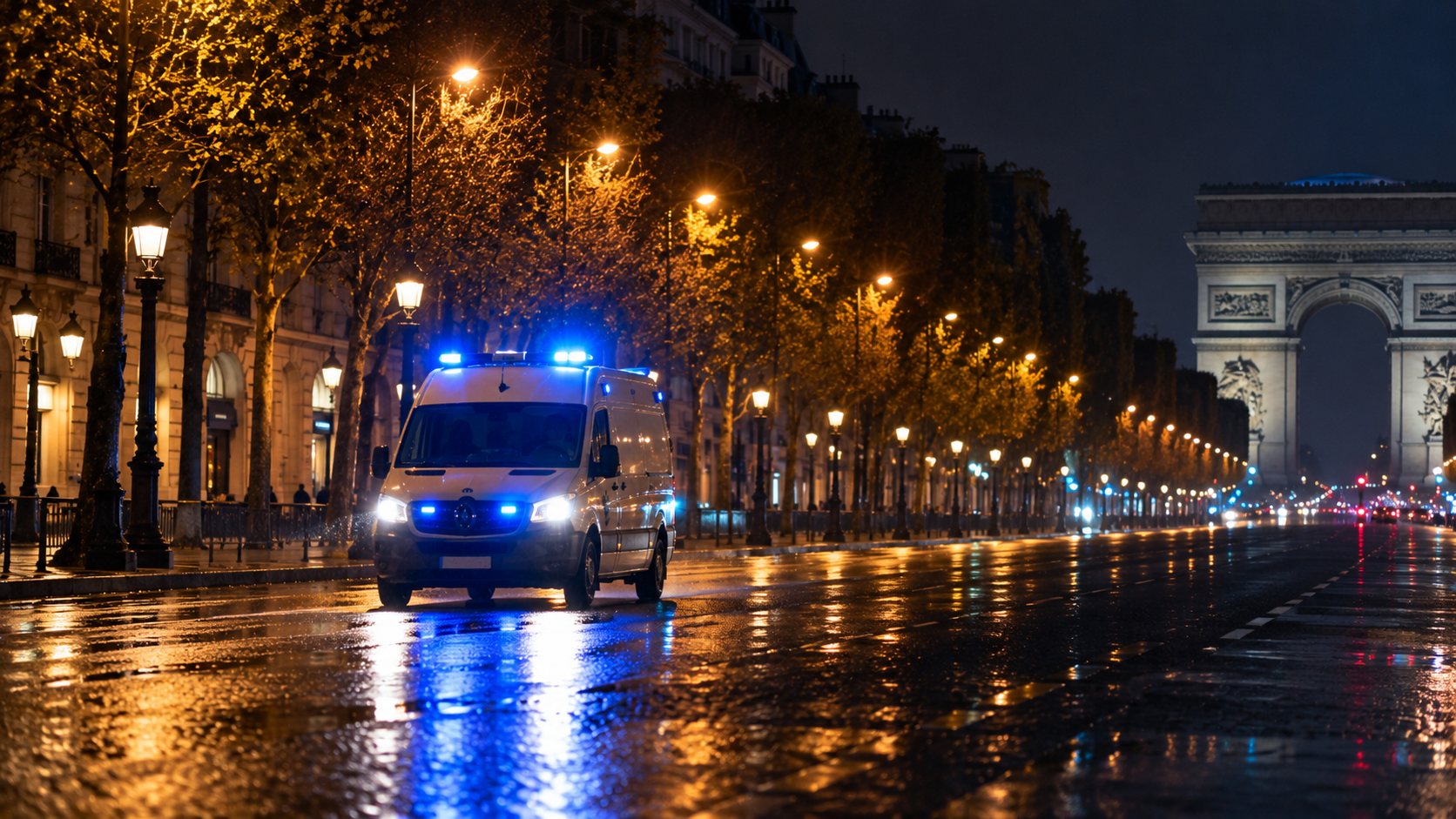
When the ambulance finally left, it did not race through the streets. It travelled slowly and smoothly, because sudden movements and braking could be dangerous for a seriously injured patient. A police escort went with it through the quiet city.
Then, close to the Pitié-Salpêtrière hospital, the ambulance stopped briefly. According to later accounts, her condition had worsened, and the doctor on board needed to treat her before they could continue. After a short pause, the journey went on.
By the time Diana reached the hospital, well over an hour had passed since the crash. Surgeons worked for a long time to save her. Sadly, she died in the early hours of the morning, at the age of 36.
In the years that followed, critics asked whether the French approach had cost precious time. Some believed that if she had been taken straight to hospital, she might have had a better chance.
Some also wondered whether the long wait at the scene was caused by the difficulty of reaching her inside the badly damaged car, as well as by the French approach to care.

At the inquest in London in 2007 and 2008, medical experts were asked about this. They gave differing views. Some felt that faster transfer to surgery might have helped, while others said her injuries were so serious that the outcome was very unlikely to have changed. The French doctors defended their decisions.
Nobody can know for certain. But for many people who loved her, that slow journey through the Paris night remains one of the most painful parts of the story, a question that may never have a clear answer.