On 8 January 2020, Prince Harry and Meghan Markle announced a decision that would change their relationship with the British Royal Family forever. They wanted to step back as senior working royals, pursue greater financial independence and divide their time between the United Kingdom and North America.
The announcement came after months of reflection, according to the couple. But the timing took the Palace by surprise, and the news quickly developed into one of the monarchy’s most significant modern family crises.
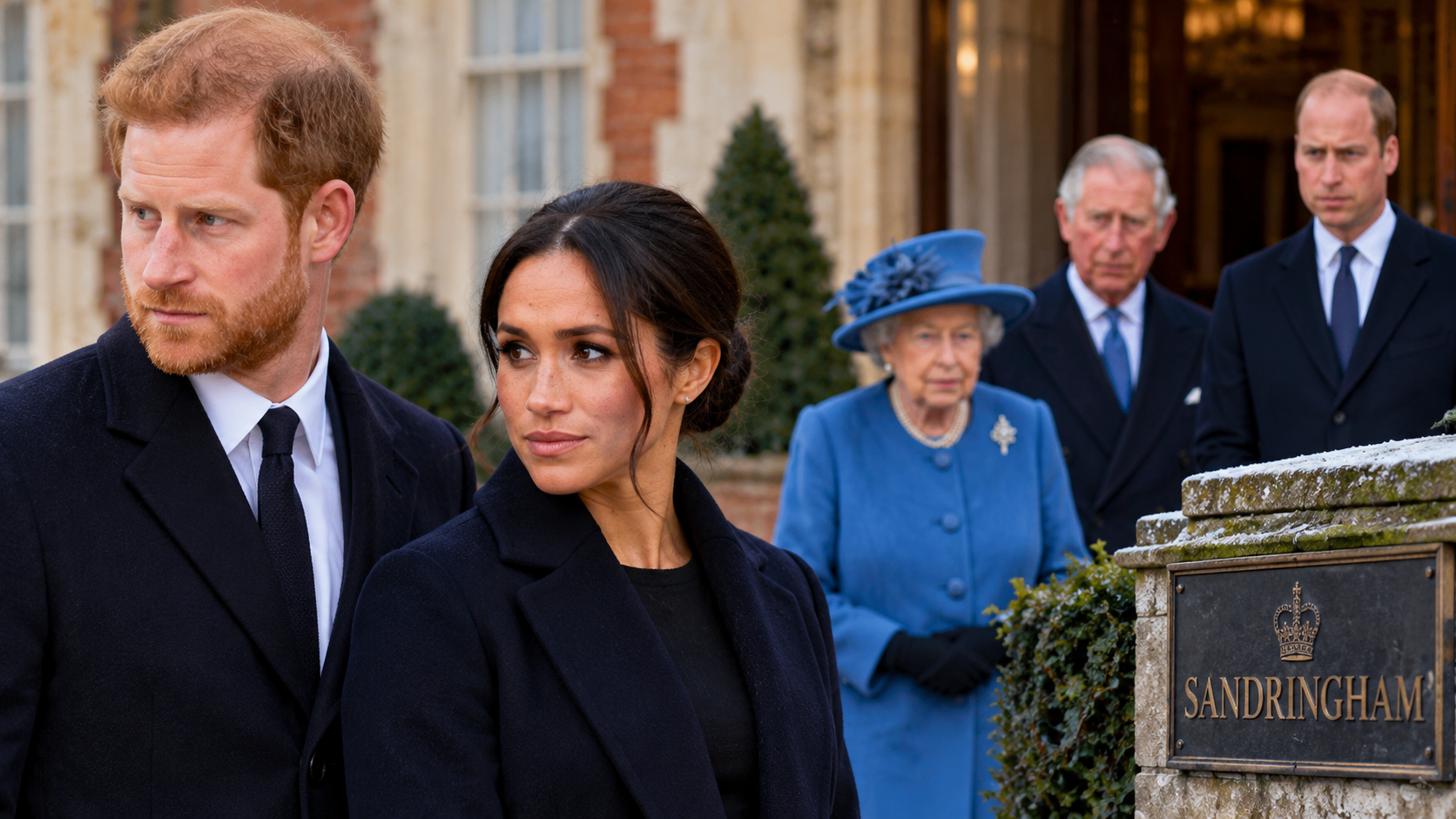
Just five days later, Queen Elizabeth II gathered senior members of the Royal Family at her Sandringham estate in Norfolk. Prince Charles, Prince William and Prince Harry were involved in discussions about what would happen next, while Meghan was expected to participate remotely from Canada but ultimately did not join the meeting.
The discussions became known as the Sandringham Summit.
What followed was an agreement that would redefine Harry and Meghan’s royal roles, their financial arrangements and the way they represented the monarchy. It was not simply a family meeting. It marked a turning point in the modern history of the Royal Family.
Why Did Harry and Meghan Want to Step Back?
By January 2020, Harry and Meghan had been married for less than two years. Their wedding at Windsor Castle in May 2018 had attracted worldwide attention, but their time as working royals had also brought intense media scrutiny.
In October 2019, Harry publicly acknowledged the pressures surrounding their lives. Meghan had also spoken about the difficulty of adjusting to life under constant public attention.
On 8 January 2020, the couple published a statement explaining that they intended to step back as senior members of the Royal Family and work towards financial independence.
They also proposed splitting their time between the UK and North America while continuing to support Queen Elizabeth II.
Their announcement described the decision as the result of many months of reflection and internal discussions. It presented their plans as an attempt to create a different future for their young family, including their son, Archie.
However, the announcement raised immediate questions.
How would the couple support themselves financially? Would they continue carrying out official royal engagements? Could they retain their royal titles while pursuing independent careers? And how would their proposed arrangements affect their security and relationship with the monarchy?
These questions required discussions between the couple, the Palace and other relevant authorities.
Why Was the Palace Surprised?

The announcement generated an immediate response from Buckingham Palace.
A statement published by the Royal Family on 8 January 2020 said discussions with the Duke and Duchess of Sussex were at an early stage and that their proposed changes involved complicated issues requiring time to resolve.
BBC reporting at the time indicated that senior members of the Royal Family had not been consulted before the public announcement. The report described the Palace as disappointed by the way the news had emerged.
The disagreement was therefore not only about Harry and Meghan’s desire for a more independent life. It also concerned how such a major change to their official roles had been announced before the practical arrangements were settled.
For a monarchy that depends heavily on established procedures and coordinated public communication, the announcement created an urgent challenge.
The Palace needed to determine what independence would mean in practice, particularly regarding public funding, official duties, royal representation and security.
The situation prompted Queen Elizabeth II to seek a workable resolution within days rather than allow uncertainty to continue indefinitely.
The Sandringham Summit: What Happened on 13 January 2020?

On 13 January, Queen Elizabeth II met Prince Charles, Prince William and Prince Harry at Sandringham to discuss the future of the Duke and Duchess of Sussex.
Meghan was in Canada at the time. Although she was initially expected to join the discussions by telephone, she ultimately did not participate.
The meeting focused on finding an arrangement that would address the couple’s wishes while establishing clear boundaries around their relationship with the monarchy.
The issues included their future official responsibilities, financial independence, royal status and the practicalities of dividing their time between countries.
The meeting attracted enormous media attention because it brought together three generations of the Royal Family during an unusually public disagreement.
However, many details of the private conversation were not officially disclosed. Reports about individual family members’ emotions or specific exchanges should therefore be treated cautiously unless supported by reliable reporting.
What is documented is the outcome: the Queen subsequently announced that the family had reached a constructive way forward and supported Harry and Meghan’s wish for a more independent life.
Queen Elizabeth II’s Response
Following the meeting, Queen Elizabeth II issued a personal statement acknowledging the discussions and expressing support for her grandson and his family.
She said she would have preferred Harry and Meghan to remain full-time working members of the Royal Family, but respected and understood their desire to live more independently.
The statement also recognised the challenges they had experienced because of intense scrutiny.
It confirmed that a transition period would allow the couple to spend time in both Canada and the United Kingdom while the arrangements were finalised.
The Queen’s response was significant because it made clear that the family had accepted the need for a new arrangement, even though the original announcement had created difficulties.
Her statement also reflected a balancing act: supporting a close family member while protecting the monarchy’s established responsibilities and public role.
The final agreement was confirmed later in January.
What Did the Final Agreement Mean?
The agreement announced by Buckingham Palace on 18 January 2020 established important changes to Harry and Meghan’s position.
The couple would step back from royal duties, including official military appointments, and would no longer receive public funds for royal duties.
They would not formally represent the Queen, although they could continue their private patronages and associations.
The statement also confirmed that they would retain their Duke and Duchess of Sussex titles but would not use their HRH styles.
The couple had also indicated that they intended to repay public expenditure associated with the refurbishment of Frogmore Cottage, their UK home.
These arrangements were scheduled to take effect in spring 2020.
It is important to distinguish between retaining a title and performing official royal duties. Harry and Meghan did not simply lose every royal title. Instead, the agreement changed their working status and how they would represent the monarchy.
The arrangement provided a framework for a more independent life while ending their role as working members of the Royal Family.
Why the Meeting Became a Defining Royal Moment
The Sandringham Summit became significant because it exposed the difficulty of balancing individual independence with the demands of a hereditary institution.
Harry and Meghan wanted greater control over their professional and family lives. The monarchy, meanwhile, had to establish clear expectations for people whose public identities and responsibilities were closely tied to the Crown.
The disagreement also demonstrated how quickly private family matters can become public controversies when senior royals are involved.
News coverage focused on the apparent divisions within the family, while commentators debated whether the couple’s proposed arrangement could work in practice.
Yet the summit was not the end of the process. It was one stage in a transition that required further decisions about residence, funding, security and public responsibilities.
Its importance lay in producing a formal agreement where considerable uncertainty had existed just days earlier.
What Happened to Harry and Meghan After the Summit?

Harry and Meghan completed their final official engagements as working royals in March 2020.
They subsequently established their lives in the United States, where they pursued independent projects, media work and charitable activities.
Their relationship with the Royal Family continued to attract attention, particularly following interviews and public statements in which they discussed their experiences within the institution.
However, their departure from working royal life did not erase their family connections or their historical place within the monarchy.
Instead, the January 2020 agreement established a different relationship between the Sussexes and the institution they had previously represented.
The consequences of that decision continued to influence public discussion of the monarchy, the role of royal media coverage and the expectations placed on members of the Royal Family.
A Meeting That Changed the Monarchy’s Modern Story
The Sandringham Summit was a turning point because it transformed an unexpected announcement into a formal agreement about Harry and Meghan’s future.
Queen Elizabeth II faced the difficult task of respecting her grandson’s wishes while ensuring that the monarchy’s official responsibilities remained clear.
The final arrangement allowed the couple to pursue greater independence but also established boundaries around public funding, official duties and royal representation.
The meeting did not resolve every disagreement or end public interest in the family’s relationships. Nevertheless, it created the framework for a new chapter in Harry and Meghan’s lives.
More than a dramatic headline, the Sandringham Summit remains an important historical episode in the evolution of the modern British monarchy.
It showed that even one of the world’s most established institutions must respond when personal choices, public expectations and tradition come into conflict.