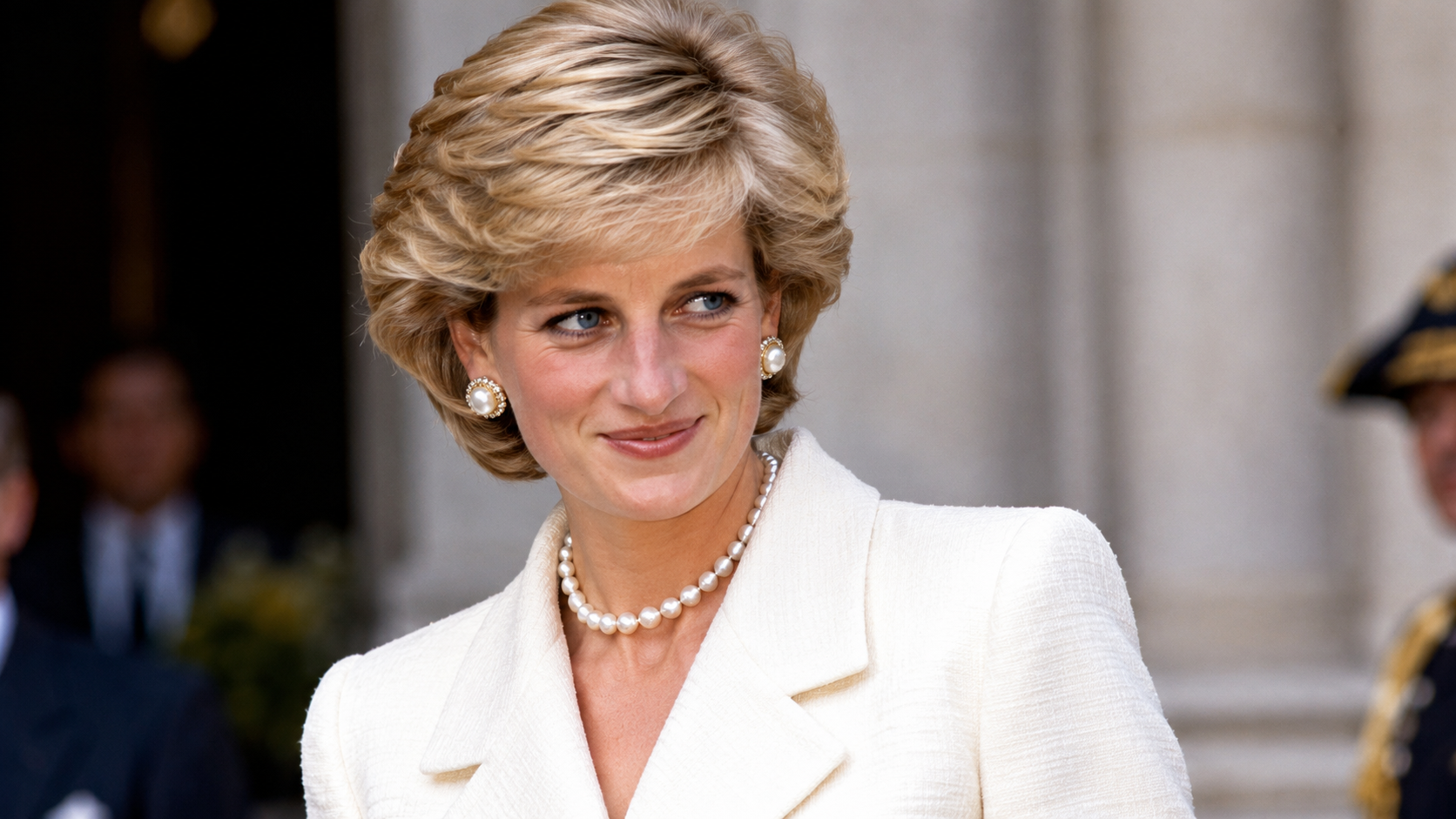

Although she retained the title Diana, Princess of Wales, the loss of her HRH style became one of the most discussed aspects of her life after divorce. Behind the formal language of royal protocol was a woman preparing to build a different future while continuing to raise her two sons, Prince William and Prince Harry.
And among the stories that have endured from this period is an emotional account of a conversation between Diana and her eldest son — a reported promise that has continued to capture the public imagination.
Why Did Princess Diana Lose Her Royal Title?

Princess Diana and Prince Charles married on 29 July 1981 at St Paul’s Cathedral in London. Their wedding attracted enormous international attention, and Diana soon became one of the world’s most recognisable public figures.
However, their marriage deteriorated over the following years. The couple announced their separation in December 1992, although they continued to share responsibilities for their sons and remained prominent members of the Royal Family.
Their divorce became final on 28 August 1996.
Under the arrangements following the divorce, Diana retained the title Diana, Princess of Wales, but relinquished the style Her Royal Highness. The change was connected to royal rules governing the status of divorced spouses of members of the Royal Family.
The Royal Family’s official biography confirms that Diana continued to be regarded as a member of the Royal Family after the divorce. She also continued living at Kensington Palace, where her office was based.
In other words, Diana did not lose every royal title or her connection to the institution. She lost the HRH style that had formed part of her public identity since her marriage.
A New Chapter After Her Divorce

The end of Diana’s marriage did not mean the end of her public life.
She continued to attract considerable attention wherever she appeared, and her work with charitable organisations remained an important part of her identity. She had become widely associated with causes involving homelessness, children, hospitals and people affected by HIV and AIDS.
Following the divorce, Diana also sought to shape her commitments around a smaller number of causes that mattered particularly to her.
Her circumstances had changed, but her public influence remained considerable. Photographs of her continued to appear in newspapers and magazines around the world, and the public remained fascinated by her personal life, her fashion choices and her relationship with the Royal Family.
The loss of the HRH style was therefore more than a change in formal address. It represented a new stage in Diana’s complicated relationship with royal life — one in which she remained internationally famous while having a different official status.
The Emotional Promise Prince William Reportedly Made
Perhaps the most touching story associated with Diana’s loss of royal status concerns her eldest son, Prince William.
According to an account published by Diana’s former butler Paul Burrell in his 2003 memoir A Royal Duty, William reassured his mother during this difficult period.
Burrell’s account describes William telling Diana that he would restore her royal style when he became king.
The reported words have been widely repeated in later coverage of Diana’s life. They are often remembered as an example of the close emotional bond between mother and son, particularly at a time when Diana was adjusting to the consequences of her divorce.
It is important, however, to distinguish this story from the documented legal arrangements surrounding the divorce. The reported promise is an anecdote attributed to Burrell, rather than an official statement issued by the Palace.
Even with that distinction, the story continues to resonate because it shifts attention away from titles, protocol and public controversy and towards a more personal question: how did a mother navigate an enormously difficult period while raising two young children?
Diana’s Relationship With William and Harry

Diana’s role as a mother was central to her life. Despite the pressures surrounding her marriage and subsequent divorce, she and Charles continued to share responsibility for the upbringing of William and Harry.
The brothers were still young when their parents separated. William was 14 and Harry was 11 when the divorce became final in August 1996.
Diana often spoke about the importance of her children, and accounts of their family life describe her efforts to maintain a close relationship with both boys amid intense public attention.
The story of William’s reported promise has endured partly because it reflects that family dimension. At a time when headlines focused on Diana’s changing royal status, the anecdote portrays a son attempting to comfort his mother.
It also illustrates why Diana’s public identity cannot be understood solely through formal titles. For millions of admirers, her significance came from her humanitarian work, her public warmth and the personal struggles that unfolded under constant scrutiny.
Did Diana Remain a Member of the Royal Family?
Yes. Despite losing the HRH style, Diana continued to be regarded as a member of the Royal Family following her divorce.
She retained the title Diana, Princess of Wales, continued to live at Kensington Palace and maintained her public and charitable activities.
The distinction matters because sensational descriptions of the event can give the misleading impression that Diana was completely stripped of her royal identity.
The official account is more specific: she relinquished the HRH style but remained Diana, Princess of Wales.
Her position had changed, but her fame and influence had not disappeared. In many respects, the years after her divorce demonstrated that Diana’s public importance extended beyond her formal place within the monarchy.
A Story That Still Resonates
Princess Diana died in a car crash in Paris on 31 August 1997, less than a year after her divorce became final.
Her death prompted an extraordinary outpouring of grief in Britain and around the world. In the decades since, interest in her life has continued through biographies, documentaries, historical reporting and dramatic portrayals of the Royal Family.
The story of her lost HRH style remains part of that history. It reveals the importance attached to royal protocol, the personal consequences of the breakdown of a royal marriage and the difficulties of rebuilding a public identity after such a profound change.
The account of Prince William’s reported promise adds a more intimate dimension to the story. Although it should be understood as a recollection attributed to a former member of Diana’s household, it has endured because it speaks to something beyond royal rules: the desire to reassure someone you love when they are facing a painful change.
Diana’s legacy was never defined by three letters alone. Her charitable work, her relationship with her sons and the connection she established with people around the world remain central to how she is remembered.
And that is why, nearly three decades later, the story of the title she lost — and the promise her son reportedly made — continues to attract attention.